We dig into how to convince your company to launch an employee meal program.
Industry leaders like Asana, Google, 2K, Sendgrid, and Meta have something in common: A powerful employee welfare strategy that includes providing free food.
But it's not just about satiating hunger. It's a strategic move that promotes productivity, attracts industry-leading talents, fosters teamwork, and motivates in-office presence.
Persuading your organisation's leadership to implement a consistent employee meal program might seem challenging.
Yet, with the right approach and compelling arguments, it is feasible.
Stay tuned as we share the benefits of free food and actionable insights to help you build a robust proposition for your upper management.
Benefits Of Free Food In The Office
1. It Makes Total Economic Sense
The first instinct among managers when they face the prospect of offering free lunches for employees is the additional cost. Although this reaction is expected, the initial upfront cost will gradually translate into cost savings.
Let's take the example of a software engineer in Singapore, earning a monthly salary of $6,000 with 40 working hours per week, down to $37.50 per hour.
Consider this: saving this employee 30 minutes a day or encouraging them to work an extra 30 minutes by having lunch in the office with the catered food is worth $18.75 to your company.
You're effectively doubling your daily investment by providing your employees $9.00 worth of complimentary food and drinks. This practice not only enhances the productivity of your employees but also makes sound economic sense.
2. A Dual Means To Attract The Best Talents And Nurture Loyalty
Offering complimentary meals positions your company as a desirable workplace, attracting high-quality applicants and nurturing a sense of loyalty among current staff.
When employees see that their employer is willing to invest in their well-being, they are more likely to commit long-term.
This act of generosity amplifies a sense of belonging and community, strengthening the company culture. Free food in the office becomes more than just a meal.
It's a tangible symbol of an organisation investing in its people.
3. Food Encourages Office Attendance
The remote and hybrid working model is here to stay post-pandemic. Although these models have their merits for employees, they’re not without their flaws.
One of the critical issues is that remote and hybrid workers often miss out on the opportunity to forge strong connections with their colleagues.
However, employers can use food, a universal language of connection, to draw employees back to the office. Free food in the workplace can incentivise employees to work on-site, allowing them to reconnect with their peers over a shared meal.

These communal dining experiences can do more than satisfy hunger. They can also spark creativity and collaboration. As employees catch up over lunch, they exchange ideas, discuss projects, and find solutions to problems, boosting overall productivity.
As the CEO of CaterSpot, Camilo Paredes has seen firsthand how company-sponsored lunches can bump up office attendance. “The motivation behind paid lunches in the office is similar to a social gathering invitation. Part of the excitement to show up is due to the free food. Our Meal Program clients have attributed improved office attendance when lunch is on the company’s tab. It’s more than just a means to offer company lunches; our Meal Program drives employee social interaction in remote and hybrid working trends.”
The idiom ‘there’s no such thing as a free lunch’ rings true. But you can flip the expression the other way with ‘There’s such a thing as free lunch if we see you in the office!’
4. Drives Productivity
Free lunches can make employees feel valued and appreciated, increasing job satisfaction and motivation. It has been proven that when employees are well-fed and have access to nourishing food, their energy levels and concentration improve, resulting in increased productivity.
By caring for their basic needs, such as providing meals, companies can eliminate the distraction of hunger and ensure their employees can focus on their work.
Furthermore, when employees do not have to worry about where, when, or what they will eat during the workday, they can invest more of their time, brainpower, and resources into tasks that matter to the company.
All of these outputs equal less time spent outdoors during working hours. Instead, employees will have more room to optimise their time in the office.
Removing the burden of food-related logistics frees employees to channel their energy into their work, resulting in higher-quality outcomes and increased innovation.
Three Essential Strategies To Reinforce Your Free Food Proposition
1. Present A Survey Finding
Conveying employees’ opinions is essential when proposing an office-wide food perk. Consider conducting an informal survey among your peers to effectively present this appeal to your management.
Doing so lets you gather data and foster a sense of shared investment in the proposed benefit.
Thinking of what questions should you include in the survey? You could start with these three questions to encourage a favourable outcome for the meal program.
- "How would having a free lunch at the office impact your daily productivity?"
Possible answers: "It would significantly increase my productivity", "It would somewhat increase my productivity", "No impact", "Decrease my productivity".
This question implies a correlation between free lunch and productivity, which is a key interest for management.
- "On a scale of 1 (least satisfied) to 5 (most satisfied), how satisfied would you be with free lunch at the office?"
Possible answers: 1, 2, 3, 4, 5.
This question directly measures the level of satisfaction employees would have with this new benefit. A high average score would provide a strong argument for implementing free lunch.
- "Do you believe a free lunch benefit would enhance the company culture and employee engagement? Why?"
Possible answer: Open-ended text response.
This question helps gather qualitative data on how free lunch might improve the work environment beyond individual productivity. The open-ended format encourages detailed responses that could be testimonials in your presentation.
Remember, the objective of the survey is to accumulate compelling, authentic feedback that demonstrates the desired impact of a free lunch program.
After collecting and analysing the responses, use this data as the foundation of your proposal to the management team.
The power of your peers' voices, combined with your insights, will play a crucial role in building a persuasive argument.
2. Benchmark Against Other Companies Offering Food Perks
In today's competitive business landscape, companies are constantly vying for top talent. One way to attract and retain these high-performing individuals is through benefits and perks, such as a free food program.
Conduct a detailed comparison of the perks offered by rival companies in your industry, particularly those implementing free food for their employees.
Present this research to your management, emphasising that to stay competitive, your company should match, if not surpass, these perks.
Highlight that this is not just about providing a free lunch but is a strategic move to enhance the company’s appeal in the eyes of current and potential employees.
3. Engage A Professional Corporate Food Solutions Service
Facilitating a successful employee meal program can be a daunting task. It involves navigating various challenges, including time-consuming searches for suitable caterers, introducing variety in meals, and managing multiple payments to different suppliers.
The solution? CaterSpot, a professional corporate food solution service.
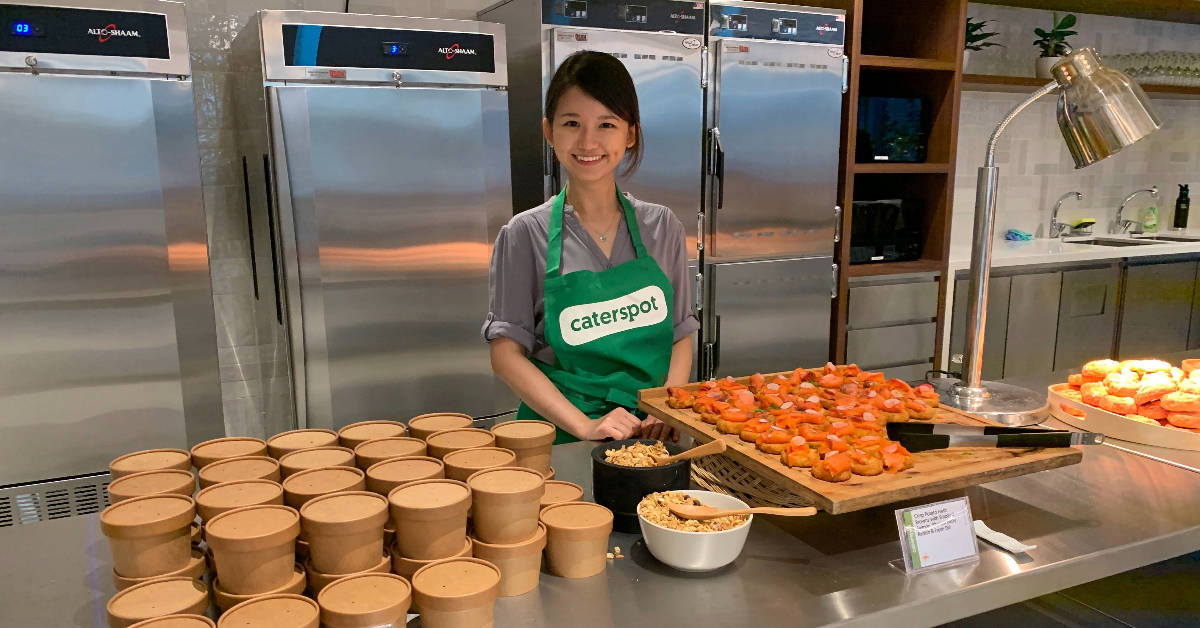
CaterSpot simplifies your office’s food management by acting as a single vendor for all your food requirements.
Offering a network of 500+ caterers and restaurants, dedicated account managers, and specialised meal plan software, CaterSpot ensures you have comprehensive support to run a successful meal program.
The best part? There are no service fees, and you'll pay the same price for food as if ordering directly from the caterers.
For those hesitant to fully commit, CaterSpot offers a 1-month trial period. Experience their full services, including an account manager, meal plan app, optional on-site coordinator, delivery service, and corporate invoicing.
This trial period presents an invaluable opportunity to assess the practicality and benefits of CaterSpot’s programme before making a long-term commitment. A taste of what’s to come could be the game changer in swaying the decision of even the most cost-conscious decision-makers.
Now It’s Your Turn To Impress With Your Pitch
Get the ball rolling to craft your proposal by applying our outlined strategies.
You can take the first step by creating a survey and share it with your peers.
In the meantime, crunch some numbers from the payroll and distil the figures into hourly salary rates for each employee. Figure out the ideal cost per pax for the meal plan based on the hourly salary rates.
While offering free food incurs an initial cost, it is a strategic investment. The expense transforms into an economic sense by boosting productivity, attracting top talents, fostering loyalty, and enhancing company culture.
As leaders like Asana and Google have shown, the long-term benefits far outweigh the upfront expenditure, making free food not just a perk but a pivotal driver of success in the modern workplace.